
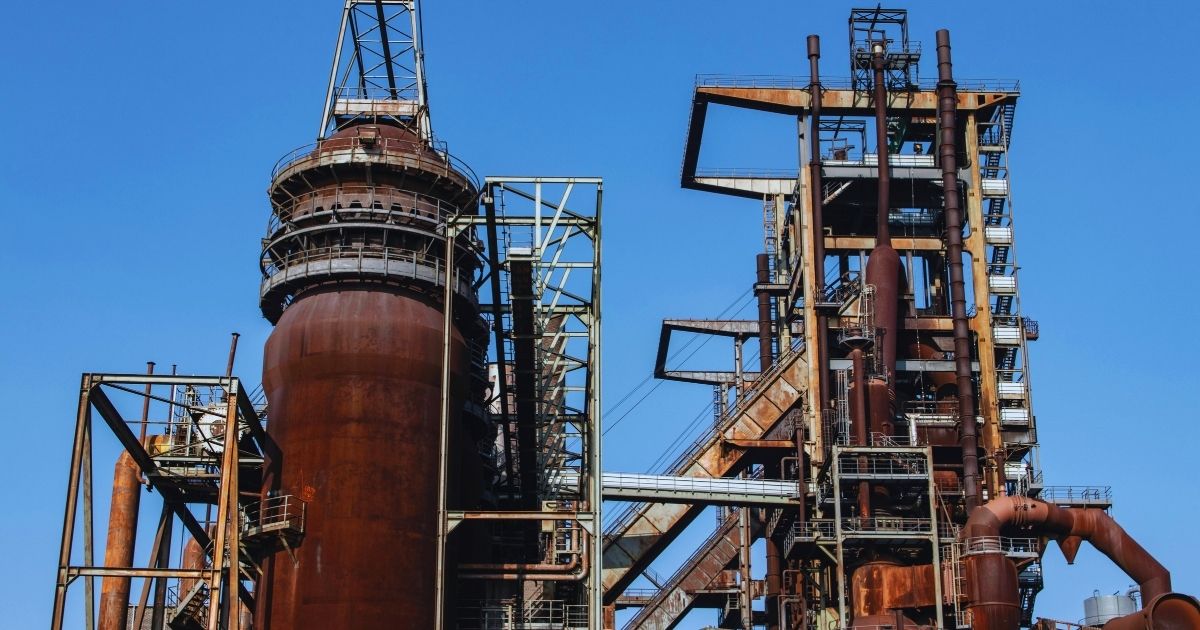
Businessmen despise corrosion: Looking back over the last two or three centuries, as the causes of corrosion issues have become clearer, it is evident that the business community's focus has been on making a profit at any cost.
As a result, in their efforts to appear environmentally friendly, companies have established standards such as the Environmental Product Declaration and Life Cycle Assessment. However, curiously, they don´t consider corrosion behavior.
The rulers, also concerned with standards, seem unaware of the importance of addressing corrosion problems: The United Nations, the top international political organization, promotes a list of international days to celebrate and raise awareness of key issues such as forests, water, zero waste, wellness, the environment, clean air, and soil. Sometimes, the focus is more trivial and suggests that lobbying or other less important concerns are more significant in decision-making. However, corrosion awareness is not included in the list.
The Corrosionists feel secure and happy because we earn a living from this situation. We're comfortable, so we put little effort into justifying ourselves, which is why we often cite outdated data on corrosion's impact. We mention USD 2.5 trillion as the annual global cost of corrosion and forget that this was a 2013 estimate. Thirteen years later, global GDP has increased by 58 percent, meaning the current global corrosion cost could be at least around USD 4.3 trillion. Almost double the often-stated figure.
Generally, most people are unaware of the problem or not very interested in solving it. If they have to deal with it, they try to live with it.
Some years ago, Mónica Hernández and I coauthored a paper discussing the direct connections among the United Nations Sustainable Development Goals, planetary sustainability, the principles of the Circular Economy, and corrosion.
It was estimated that the engineering materials used in 2014 totaled about 927.65 × 10⁹ tons (https://doi.org/10.1038/s41586-020-3010-5). Recently, Dierk Raabe estimated that the annual production of materials exceeds 40 billion tons. This production is responsible for 9.400.000.000 tons of CO₂, with mineral and metal processing accounting for 63.4%.
Another aspect of the environmental footprint of engineering materials concerns their effects on soil and subsoil. N. T. Nassar et al. estimated that in 2018, 9100 million tons of rocks were removed from the globe to extract gold, 9400 million tons to extract copper, and 12900 million tons to extract iron. We are speaking of millions and millions of tons of earth removed every year to obtain the materials supporting our development.
Recognized corrosionists Ingrid Milošev and John R. Scully recently challenged us to build a sustainable metals-based society, starting with an advanced approach to a circular sustainable economy. Similarly, Tomáš Prošek et al. demonstrate that corrosion protection and sustainability are closely linked and conclude that corrosion science and engineering are essential to achieving today's sustainability goals.
We can no longer consider valid the figures set by T.P. Hoar 60 years ago, in 1966, that 20 percent of corrosion costs were avoidable with current knowledge. Naturally, a much higher percentage is avoidable today, and it is crucial that we work to raise that number to 70, 80 percent, or more.
Today, more than ever, awareness of corrosion is crucial for building a sustainable future for our descendants and all humankind.
Let's celebrate the International Corrosion Awareness Day (ICAD) and work toward establishing not only an International Corrosion Awareness Month (ICAM) but also a permanent ICAY. Luckily, the importance is increasing, and you can find most of the activities here.